


It has been about a decade since I replaced unbiblical and consumer-driven holidays like Christmas for the true Holy Days of God written in the Bible.
Instead of Easter ham, I switched to Passover lamb.
Instead of going out camping whenever I felt like it, I started observing the annual wilderness retreat called Sukkot, or Tabernacles.
The list goes on.
If you are new to my work or if you have been wondering about the biblical holidays and how we should observe them, then you are in the right place. The New Year just began, and it’s the perfect time to revisit some misunderstood ideas having to do with Passover coming up and its specific timing.
Isn’t Passover for the Jews Only?
Every year there is predictable pushback from the broader Christian community when it comes to this whole topic. The number one thing that churches have been pushing for a very long time is that “feasts like Passover are for Jews only, so stop Judaizing because we have freedom in Christ to do what we want now.” Non-Jewish Christians automatically assume a “gentile” identity, and they proceed to embrace whatever consumeristic holiday is next on the annual corporate marketing scheme without any pushback. Like they say, if you don’t stand for something, you’ll fall for anything.
Here’s what the Bible has to say:
“Speak to the children of Israel, and say to them: ‘The feasts of the LORD, which you shall proclaim to be holy convocations, these are My feasts.” - Leviticus 23:2 NKJV [emphasis mine]
As you can see, God claims ownership of the “feasts” by calling them His. By having them recorded by the hand of Moses and taught from generation to generation, God is simply allowing His people to partake of what already belongs to Him. This is His culture; His holidays are for His set-apart people. Yet, for some reason everyone keeps teaching the Bible as if it says this instead (watch the words in bold):
“Speak to the children of Israel, and say to them: ‘The feasts of the LORD, which you shall proclaim to be holy convocations, these are for the Jews only.”
Just like the serpent in Eden, people have twisted God’s word in a very precise way. The reality is that the people group called “Jews” in the New Testament were those people who descended from the southern kingdom of Judah who came back after 70 years of Babylonian captivity. This kingdom consisted of the tribes of Judah, Benjamin, and some of Levi. However, the original instructions of God as written in the first five books of Moses were given not only to the Jews but also to the ten tribes of the northern kingdom, or Israel. Collectively, all of the tribes together were simply called the “children of Israel” throughout the Torah.
Regarding the Passover that is recorded in Exodus chapters 12 and 13, we see something quite interesting about who is observing the Holy Day. After the ten plagues of God destroyed the land of Egypt, we see this very significant description of the people who left in the Exodus:
A mixed multitude went up with them also, and flocks and herds—a great deal of livestock. - Exodus 12:38
The Scripture very clearly states that a “mixed multitude” of wise Egyptians joined the tribes of Israel after they saw the hand of God destroy their kingdom. They saw the miracles and power of God, and they thought to themselves, “I want that One to be my God.”
If you recall, the final plague of the ten was the death of the firstborn, and this event coincided with the observance of Passover. Since a mixed multitude of non-Israelites had just joined themselves to God’s set-apart people, there was a specific instruction given regarding their inclusion in the Passover observance:
And the LORD said to Moses and Aaron, “This is the ordinance of the Passover: No foreigner shall eat it.” - Exodus 12:43
“And when a stranger dwells with you and wants to keep the Passover to the LORD, let all his males be circumcised, and then let him come near and keep it; and he shall be as a native of the land. For no uncircumcised person shall eat it.” - Exodus 12:48
As you can see, the non-Israelites (presumably an Egyptian majority) were indeed allowed to observe the Passover, but they had to first be granted citizenship into the nation of Israel. In those days, the first step to becoming part of the set-apart kingdom was for the men to be circumcised. They would then need to follow the laws of the kingdom as citizens, or else they would be punished according to the law, including being “cut off” (loss of citizenship) or in severe cases, even put to death. In fact, there is a case study given in Leviticus 24:10,11 where a half-Egyptian boy, whose mother was a full-blooded Israelite from the tribe of Dan, cursed the sacred name of God, and he was therefore put to death. In other words, the Egyptians were allowed to marry and mix into the tribes and assume an Israelite identity, including the blessings of obedience and the curses for disobedience.
Moving forward to the time of the New Testament, nothing changes. The only difference is that the kingdom is scattered. Instead of a more obvious sojourning of a nation together under theocratic Law in the wilderness, there is a less obvious spiritual nation that God has raised up to be his people. It is not physically in one location—it is dispersed. However, the rules of citizenship were never nullified or abolished. They remained in effect, even to this very day. Simply pay attention to the apostles. Peter is a great example. Pay attention first to who he addresses and then how he refers to this audience:
Peter, an apostle of Jesus Christ, To the pilgrims of the Dispersion in Pontus, Galatia, Cappadocia, Asia, and Bithynia - 1Peter 1:1
But you are a chosen generation, a royal priesthood, a holy nation, His own special people, that you may proclaim the praises of Him who called you out of darkness into His marvelous light - 1Peter 2:9
He refers to those Christians living in Asia Minor as a “holy nation”. Just like any nation, God’s nation has laws. That is why Jesus declared this very important statement when He began His ministry:
“Do not think that I came to destroy the Law or the Prophets. I did not come to destroy but to fulfill. For assuredly, I say to you, till heaven and earth pass away, one jot or one tittle will by no means pass from the law till all is fulfilled.” - Mat 5:17,18
People get hung up on the word “fulfilled”, as if a prophetic manifestation of the Law somehow means that the Old Testament can be thrown into a trash can.
Fulfilled does not mean to destroy.
Fulfilled does not mean to abolish.
Fulfilled does not mean to nullify.
While it’s true that Christ fulfilled very specific Old Testament prophecies that pertained to His first coming, He Himself kept the Law perfectly as the sinless and spotless Lamb of God. Keeping the Law also means that He could not break the Torah commandment that prohibits adding to the law or taking away from it (see Deu 4:2, Deu 12:32, Pro 30:6). Most of Christianity says “the Law is done away with”, but by doing so, they break the commandment of taking away from the Law while also misrepresenting the very words of Christ.
Jesus made it very clear that we are to keep his commandments:
Then Jesus spoke to the multitudes and to His disciples, saying: “The scribes and the Pharisees sit in Moses’ seat. Therefore whatever they tell you to observe, that observe and do, but do not do according to their works; for they say, and do not do.” - Matthew 23:1-3
“As the Father loved Me, I also have loved you; abide in My love. If you keep My commandments, you will abide in My love, just as I have kept My Father’s commandments and abide in His love.” - Jhn 15:9,10
“If you love Me, keep My commandments.” - Jhn 14:15
We are to keep the commandments of Christ, just as He kept them when He was physically walking the earth in a tabernacle of human flesh. Jesus even went so far as to say that we should be paying attention to how the scribes and Pharisees were observing the Law (Moses’ seat) because they were doing some things the right way. Even though they corrupted God’s Law by adding their own man-made traditions and hypocritical requirements, Jesus still said to pay attention to how they were doing things. As Christ’s disciples, we must simply guard ourselves from religious hypocrisy. We must guard ourselves from adding to or subtracting from God’s word.
As you will see, this is a very important point to emphasize before we dive into the timing of the Passover meal itself. There is a specific timing that is well-documented in history, but it is very easy to miss if one only relies on certain New Testament verses in isolation. Let us now get a little more specific on the timing of the month itself in which Passover occurs.
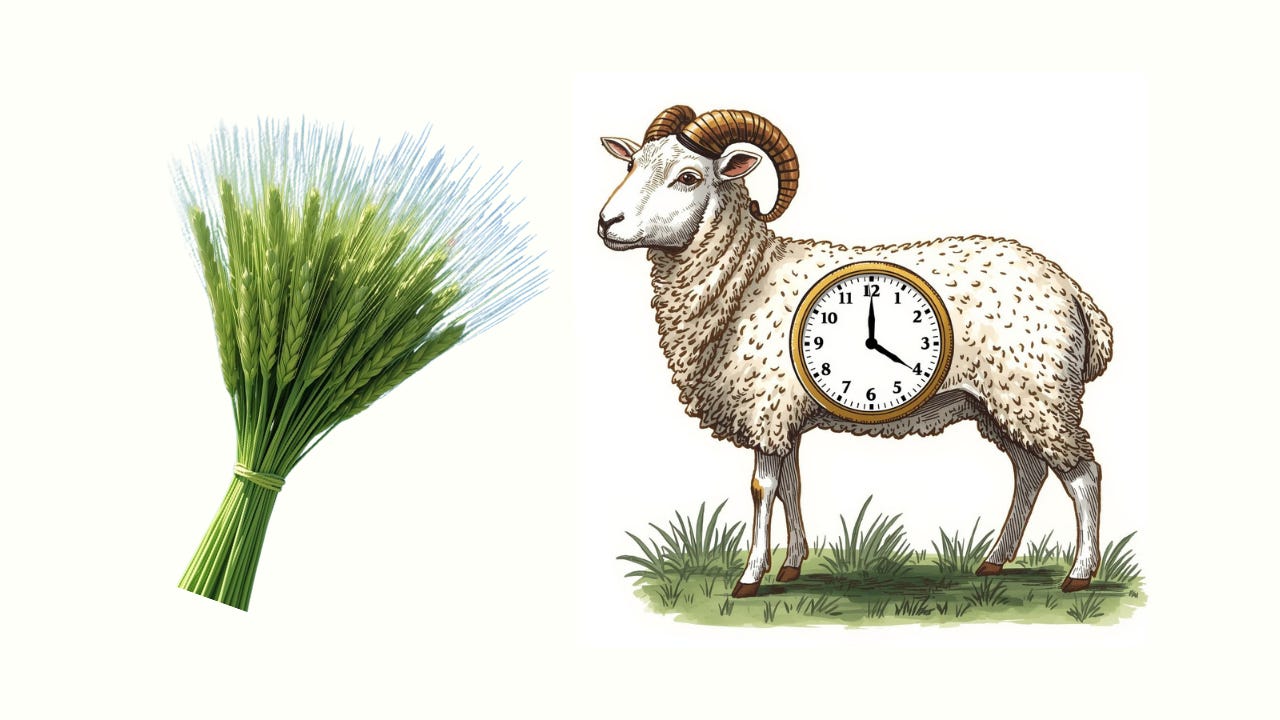
The Timing of Passover: Establishing the Month of Abib
As already mentioned, the Passover during the Exodus from Egypt establishes important details regarding the actual timing of the feast. The Torah states:
“On this day you are going out, in the month Abib.” - Exodus 13:4
The Hebrew word used here, אָבִיב or Abib, is usually always correctly transliterated in English versions of the Bible. This word means “fresh, young barley ears, barley” and specifically refers to the “month of ear-forming, of greening of crop, of growing green Abib”.1 Therefore, in order to begin the first month of the year and observe Passover on the 14th day of this month, there must be the presence of green ears of barley growing in the land of Canaan. This rule is further established in Leviticus 23:
…When you have come into the land which I give to you, and reap its harvest, then you are to bring the omer of the firstfruits of your harvest to the kohen. He is to wave the omer before Adonai, to be accepted for you. On the morrow after the Shabbat, the kohen is to wave it. Lev. 23:9-11 TLV [emphasis added]
The kohen (priest) is to wave what is called the omer of barley firstfruits on the first Sunday during the seven days of Unleavened Bread. Most English translations use the word sheaf instead of omer, which is why I chose to use the TLV for this passage. An omer is simply a biblical measurement of two liters. In other words, two liters of firstfruits barley grain were to be presented as an offering during the month of Abib. That is why there must be green ears of barley present to begin this first month, and these green ears must be in a harvestable state by the time of the wave offering anywhere from 15-21 days after the first month begins.
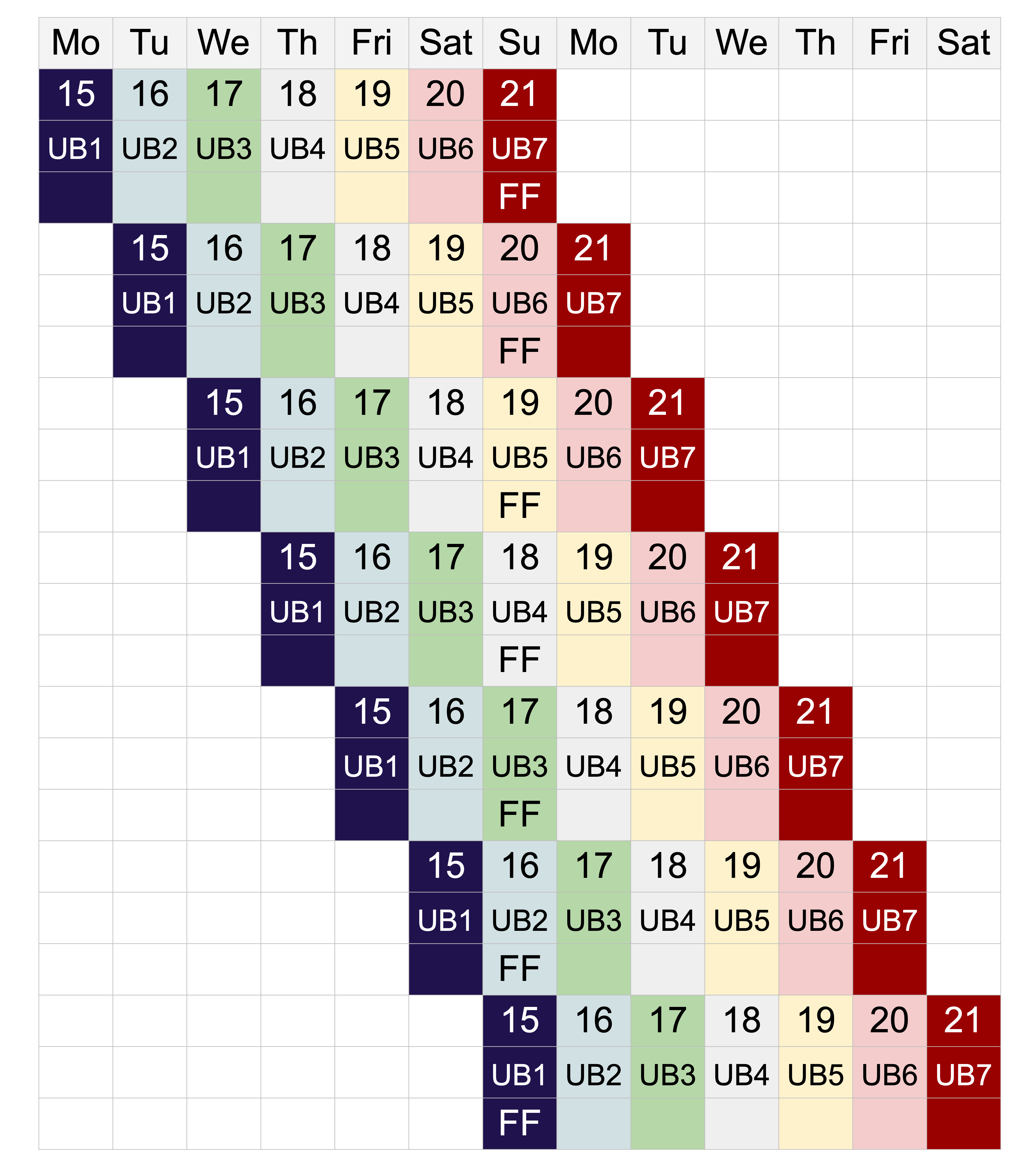
Figure 1: Hebrew Summer Feasts Dating Guide.
UB = Unleavened Bread ; FF = Firstfruits Wave Offering
Depending on the exact day of the week that the first month began, the first day of UB, which is the same thing as the 15th day of the month, can fluctuate. As you can see, the Sunday during the week of UB is always the day of the FF.
Like any Hebrew month, the very first day of the month is determined by the sighting of the renewed sliver of the crescent moon. Psalm 89:37 states that the moon is “the faithful witness in the sky.” Unlike the sun, the moon visibly changes and demonstrates a cyclical nature of renewal throughout the year.
The Hebrew term chodesh is translated in a general sense as month 254 times in the KJV and more directly as new moon 20 times.2 Overall, this Hebrew word is used 276 times in the Old Testament.3 Care must be taken to also examine the root word, chadash, (Strong's H2318). This word is translated in the Bible as “to be new, renew, repair.”4 With this understanding, then, we should view the Hebrew word chodesh, or its English equivalent of month, to be strictly speaking of a renewed moon.
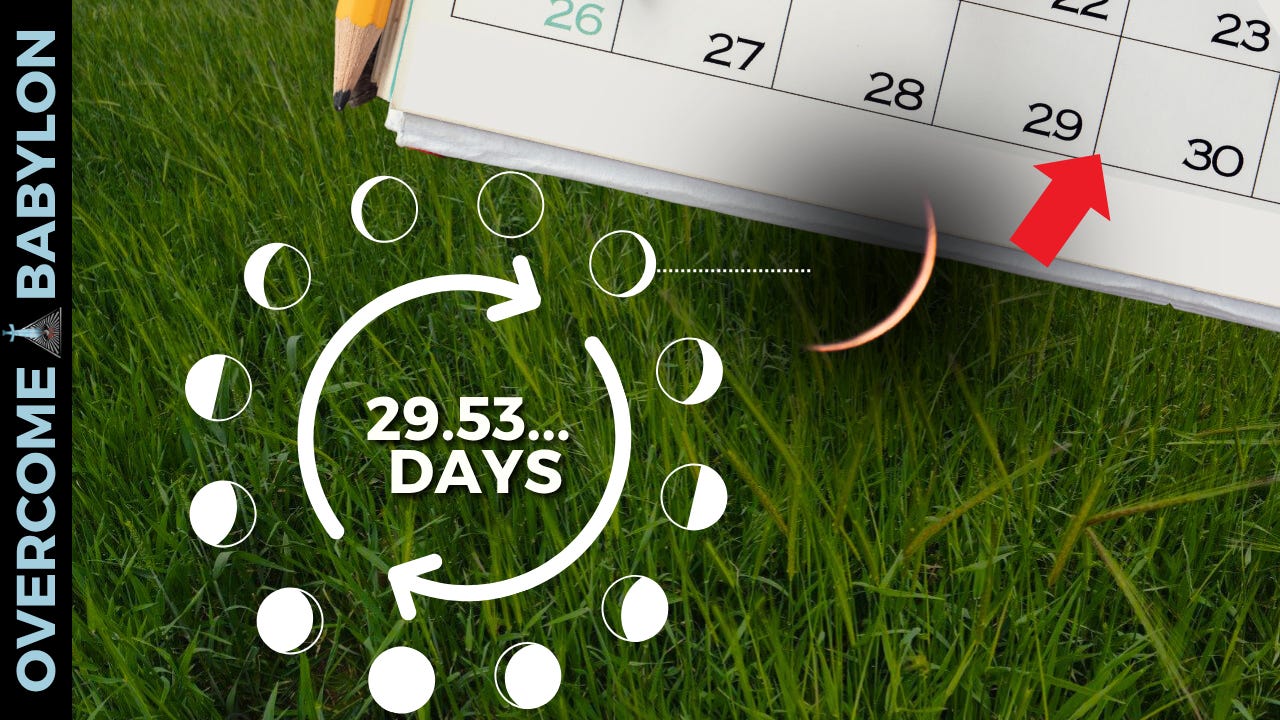
This faithful witness is also very predictable. It takes the moon about 29.530 days in its cycle around the earth to arrive at the same phase of a new moon. What this means practically is that a biblical month can only have 29 to 30 days but certainly no more than 30 days. This also means that the moon makes about 12.4 circuits around the earth in a year. That is why a Hebrew 13-month year occurs sometimes with an added month in order to avoid calendrical drift where, for example, Passover would erroneously take place in the winter. A great example of such an erroneous time keeping system can be found within Islam. Since the Muslim calendar is strictly a lunar one with no correction through intercalation, the celebration of Ramadan slowly drifts into every season of the year. Sometimes it is in the winter; sometimes it is in the summer. Worth mentioning here is the Enoch and Jubilees solar calendar of the Jewish Essenes. This is also an erroneous system that experiences drift because its 364-day calendar is shorter than a solar year of approximately 365.25 days. The Enochian calendar does not have a method for leap years or intercalation, leading to intense debate and speculation amongst those who try to follow it. Most groups that I have seen over the years attempt to reset the Enoch calendar at the time of the spring equinox in order to make up for the difference. This practice is in disobedience to the instructions of the Bible.
During the time of Christ, the determination of New Moons, the presence of Abib barley, and the need for a 13th month were all determined by the ruling priest class of Jews known as the Sanhedrin. Towards the end of a given month, the Sanhedrin would summon and cross examine witnesses who claimed to have seen the new moon, which was always understood to be the very first sliver of a renewed crescent moon. Various details involving this renewed moon report on the 29th or 30th day of a given month are explained in great detail in a Jewish document called Mishna Rosh HaShana, compiled by Rabbi Yehuda HaNasi around AD 200.5 If the witnesses’ accounts were corroborated, then the evening that the crescent moon was sighted would begin the first day of the next month. If no witnesses came forth to confirm a new moon sighting by the 30th day, then the evening would begin the new month by default because a biblical month cannot have more than 30 days.
Remember what I mentioned earlier: the scribes and Pharisees of Christ’s day sat in “Moses’ seat”. As you can see, the historical writings of the Mishna are certainly helpful in understanding what Christ meant when He said we should pay attention to what the Jews of His day were doing.
Observing the Original Calendar in Our Modern Context
From ancient times until now, God’s calendar has always maintained the same agricultural and lunar time clock. Back in the time of Christ, the scattered Israelites around the ancient Near East would receive reports of the New Year and the months in creative ways. The Jewish writings in the Mishna Rosh HaShana explain the following:
“Initially, after the court sanctified the new month they would light torches on the mountaintops, from one peak to another, to signal to the community in Babylonia that the month had been sanctified.”6
Of course, lighting torches on mountaintops is no longer necessary for receiving messages these days. With the advancement of the internet, we now have eye witness testimony of the renewed moons and also the barley in the land of Canaan, or Palestine. With various Facebook groups, websites, and other social media avenues conveying this information, the diaspora, or God’s scattered people worldwide, have had the opportunity to come back into the correct alignment with the timing that God established in His Word. Feel free to check some of these out using the button below:
Every year, there are debates amongst the groups that understand the need for barley to begin the New Year. There are differences of opinion, and not all agree. When examining a given field, some of the major points of contention have to do with:
Is the inspected barley field in a microclimate (e.g. next to a paved road) that abnormally increased its growth?
Was the field of barley planted using modern machinery and implements, or is it a field of wild, heirloom barley?
Was the field artificially managed, including but not limited to irrigation?
There are more considerations then these. Some argue that as long as exactly one omer (two liters) of barley are able to be found anywhere at all, then the year is to be declared as having begun on the particular renewed moon that pertains to the presence of the barley.
My own opinion and analysis of the Spirit and the Letter of the Law aligns more closely with what Becca Biderman has been proclaiming in her newsletters, YouTube channel, and website.7 There are certainly other witnesses and opinions, but I like how Becca emphasizes the need for the land to declare the timing properly, without human intervention. In other words, God is the one who is irrigating and managing the fields to establish the head of the year just as it was in ancient times, and we must avoid artificially managed fields or inappropriate microclimate disruptions in the determination of the barley each year.
Of course, with World War 3 now in plain sight, it is to be expected that the internet and communications will be heavily disrupted, if not completely cut off, at some point in the very near future. The current state of Israel will also be defeated and severely destroyed as I have explained in my analysis of Isaiah 22 and other key passages of prophetic Scripture. In fact, I recommend my livestream from January 1 if you have not yet watched it (use the button below):
In the face of such circumstances, I am currently putting together a resource for you that will be a pre-calculated calendar that closely aligns with future new moon sightings without the falsehoods that have been inserted into the Hillel II calendar of Judaism. I will update you as that project comes into completion and provide more information soon.
Jesus and the Passion Week
The timing of Passover is directly connected to the single-most important series of events in the New Testament that are often referred to as the Passion Week. This was the time when the Lord testified boldly in Jerusalem, was ultimately betrayed, brutally crucified, and then resurrected in glory.
There is no escaping the obvious and highly intentional wording of several New Testament authors in connecting Jesus’ death directly to the sacrificial Passover Lamb. The Apostle Paul wrote:
Therefore purge out the old leaven, that you may be a new lump, since you truly are unleavened. For indeed Christ, our Passover, was sacrificed for us. - 1Co 5:7 NKJV
John the Baptist declared this when he saw Jesus:
“Behold! The Lamb of God who takes away the sin of the world!” - Jhn 1:29
In the Book of Revelation, the Apostle John writes:
Worthy is the Lamb who was slain to receive power and riches and wisdom, and strength and honor and glory and blessing! …And the twenty-four elders fell down and worshiped Him who lives forever and ever. - Rev. 5:12,14
The Apostle Peter also writes:
…you were not redeemed with corruptible things, like silver or gold, from your aimless conduct received by tradition from your fathers, but with the precious blood of Christ, as of a lamb without blemish and without spot. - 1Pe 1:18,19
Just in these verses, you can see that the core metaphor of Christ’s sacrificial death is that of the Passover lamb. In the Torah, this lamb could not have any of its bones broken (Exo 12:46), and it was not to have any deformity or blemish. It was to be a perfect firstborn male of the flock.
Jesus met all of these requirements.
Knowing this, we must address the generational misunderstanding that confuses Passover with the Last Supper. This is a common error that many have made, and there is a good reason for it.
So, the question now becomes this: how could Jesus die in the fulfillment of the sacrificial Passover lamb when the Gospels also appear to say that He already kept the Passover with His disciples the night before he died? Both things cannot be true. He either died as the Passover lamb that year at the appointed time, or he did not. There is no middle ground.
As you will see, the Lord’s Supper (Last Supper) and Passover are simply not the same thing. This distinction is easy to make when the events of the Passion Week are more clearly laid out in a timeline. Simply remember that a biblical day is from ereb to ereb (sunset to sunset) as established in Genesis chapter 1. In other words, a new day begins in the evening. I will now list the order of events as presented to us in the Gospels.
⏰ Six Days Before Passover:
Then, six days before the Passover, Jesus came to Bethany, where Lazarus was who had been dead, whom He had raised from the dead. - Jhn 12:1
⏰ Five Days Before Passover:
The next day a great multitude that had come to the feast, when they heard that Jesus was coming to Jerusalem, took branches of palm trees and went out to meet Him, and cried out: “Hosanna! ‘Blessed is He who comes in the name of the LORD!’ The King of Israel!” Jhn 12:12,13
⏰ Four Days Before Passover:
Now in the morning, as He returned to the city, He was hungry. And seeing a fig tree by the road, He came to it and found nothing on it but leaves, and said to it, “Let no fruit grow on you ever again.” Immediately the fig tree withered away. - Mat 21:18,19
⏰ Three Days Before Passover:
Now in the morning, as they passed by, they saw the fig tree dried up from the roots. And Peter, remembering, said to Him, “Rabbi, look! The fig tree which You cursed has withered away.” So Jesus answered and said to them, “Have faith in God. - Mar 11:20-22
⏰ Two Days Before Passover:
Now it came to pass, when Jesus had finished all these sayings, that He said to His disciples, “You know that after two days is the Passover, and the Son of Man will be delivered up to be crucified.” Mat 26:1,2
⏰ One Day Before Passover:
Now the Feast of Unleavened Bread drew near, which is called Passover. And the chief priests and the scribes sought how they might kill Him, for they feared the people. Then Satan entered Judas, surnamed Iscariot, who was numbered among the twelve. - Luk 22:1-3
The day before Passover is presented to us in a way that will easily confuse someone who is not well versed in the Torah itself. Luke states that the Feast of Unleavened Bread is called Passover, which is misleading. The Feast of Unleavened Bread is seven days long, so it is not perfectly synonymous with Passover, which is only a one-day event. What Luke is intending to say is that the late afternoon of the 14th day of the month is when the Passover is prepared, and when the sun sets to begin the 15th day, then it is already the first day of the Feast of Unleavened Bread. In this sense, the first day and Passover could be understood to be interchangeable, since observers will be having a feast in the evening.
The late afternoon of the day before Passover is also the time when the Last Supper was being prepared with the disciples. This was not the day of Passover itself; it was still the day before. This idea will become more clear in a moment.
And as they were eating, Jesus took bread, blessed and broke it, and gave it to the disciples and said, “Take, eat; this is My body.” Then He took the cup, and gave thanks, and gave it to them, saying, “Drink from it, all of you.” …And when they had sung a hymn, they went out to the Mount of Olives. - Mat 26:26,27,30
⏰ The Day of Passover:
It was in the Garden of Gethsemane where the disciples fell asleep in the darkness of the night when Jesus told them to watch and pray. The night now began a new day—the day of Passover. It is here in the late evening when Jesus is betrayed and taken into custody:
And while He was still speaking, behold, Judas, one of the twelve, with a great multitude with swords and clubs, came from the chief priests and elders of the people. - Mat 26:47
Jesus then has to face the Sanhedrin, who accuse Him of blasphemy when He quotes Daniel 7:13 to be speaking of Him and His return to the earth in glory. The Sanhedrin rules to put Him to death for their false accusation of blasphemy, since Jesus made Himself out to be God, which was anathema to the unbelieving Jews. As Peter finishes denying Christ three times in the courtyard just outside of the assembly of priests, the rooster suddenly crows.
The early morning hours of Passover had begun.
After Pilate examined Jesus, he wanted to let him go. Looking for a way out, he presented a significant question to the Jews that further cements the timing of the events:
“But you have a custom that I should release someone to you at the Passover. Do you therefore want me to release to you the King of the Jews?” Then they all cried again, saying, “Not this Man, but Barabbas!” Now Barabbas was a robber. - John 18:39,40
It was Passover day, and Jesus could have been let go; but instead, the thief and murderer known as Barabbas was released. The irony here is a very intentional part of the narrative, especially because the name Bar-Abba in Aramaic means son of the father. The righteous Son of the Father was put to death so that the unrighteous son of the father could be restored. That represents you and me today.
Moving forward through the narrative, we see that the Gospels give us very specific time stamps that further link Jesus’ sacrificial act with that of the Passover lamb. Mark records:
Now it was the third hour, and they crucified Him. And the inscription of His accusation was written above: THE KING OF THE JEWS. - Mar 15:25,26
The third hour corresponds with 9:00 AM in our modern sense of time keeping. Matthew also records:
Now from the sixth hour until the ninth hour there was darkness over all the land. And about the ninth hour Jesus cried out with a loud voice, saying, “Eli, Eli, lama sabachthani?” that is, “My God, My God, why have You forsaken Me?” And Jesus cried out again with a loud voice, and yielded up His spirit. - Mat 27:45,46,50
The ninth hour corresponds with 3:00 PM, so from 9am to 3pm, we see the documented time from when Christ is first crucified to when He takes His final breath.
There is a clear reason why the Gospel writers were inspired by the Holy Spirit to record these specific details surrounding the Passover sacrifice that year. They recorded these things so that we would not be confused about the prophetic implications of Jesus’ death, even down to the very hour that it took place.
What many fail to realize is that the southern Kingdom of Judah had been observing the Torah properly after they came back from Babylonian captivity. Their first acts of faithfulness are recorded in the books of Nehemiah and Ezra, and the temple was quickly rebuilt. Although they did experience corruption through man-made practices and the eventual adoption of truly sinister things, the Jews did uphold the observance of Passover properly in ancient times. It is recorded in Talmudic tradition, specifically Pesachim 5:1, that the Passover lamb was slaughtered in the afternoon of the 14th day of the month, specifically around 3:00 PM (the ninth hour) and shortly after the daily afternoon sacrifice (the Tamid, or daily offering).
More specifically, Pesachim 5 states that under normal circumstances, the daily afternoon offering was slaughtered at eighth and a half hours (2:30 PM). This daily offering was then sacrificed (put on the altar) at nine and a half hours of the day (3:30 PM).
However, this daily afternoon offering was moved back by an hour on the day of Passover. In order to make a distinction between the daily afternoon sacrifice that was made at the temple, the slaughter of the Passover took place after the daily afternoon sacrifice. The daily offering would therefore be at the seventh and a half hour (1:30 PM) and would be placed on the altar at the eighth and a half hour (2:30 PM) in order to accommodate the Passover afterwards.8
The slaughter of the Passover would occur around 3:00 PM, with the meal eaten later that evening toward the setting of the sun. This timing is what is meant by the word “twilight” (erev) in Leviticus 23:5:
‘On the fourteenth day of the first month at twilight is the LORD’s Passover. - Lev. 23:5
The Passover would be slaughtered during the afternoon of the 14th day and then the meal prepared in time for the setting of the sun, or twilight. This timing absolutely and perfectly aligns with the time that Christ was crucified.
Now you are starting to see how all the New Testament authors are in agreement that Christ was indeed the Passover lamb. Other sources outside of the Talmud also confirm this timing, including the historian Flavius Josephus9 and also Philo of Alexandria.10
Three Days & Three Nights: A Generational Misunderstanding
Because Christians have rejected the observance of God’s holidays for so long now, there is also great confusion over the fact that Jesus really was in the grave for three days and three nights, just like He said. All of Christendom has substituted the simplicity of God’s word for Good Friday to Easter Sunday, but this timeline does not allow for the three days and nights that the New Testament proclaims.
“For as Jonah was three days and three nights in the belly of the great fish, so will the Son of Man be three days and three nights in the heart of the earth.” - Mat 12:40
In order to understand this timeline, it is helpful to assign days of the week to the Passion Week. This is able to be done because of what we are told near the end of Matthew:
Now after the Sabbath, as the first day of the week began to dawn, Mary Magdalene and the other Mary came to see the tomb. - Mat 28:1
Here, we see that the tomb was already empty on Sunday, which is why we refer to this day as resurrection Sunday. Now, all we have to do is work backwards to understand when Jesus was put to death three days and three nights earlier. I will illustrate these things on a timeline.
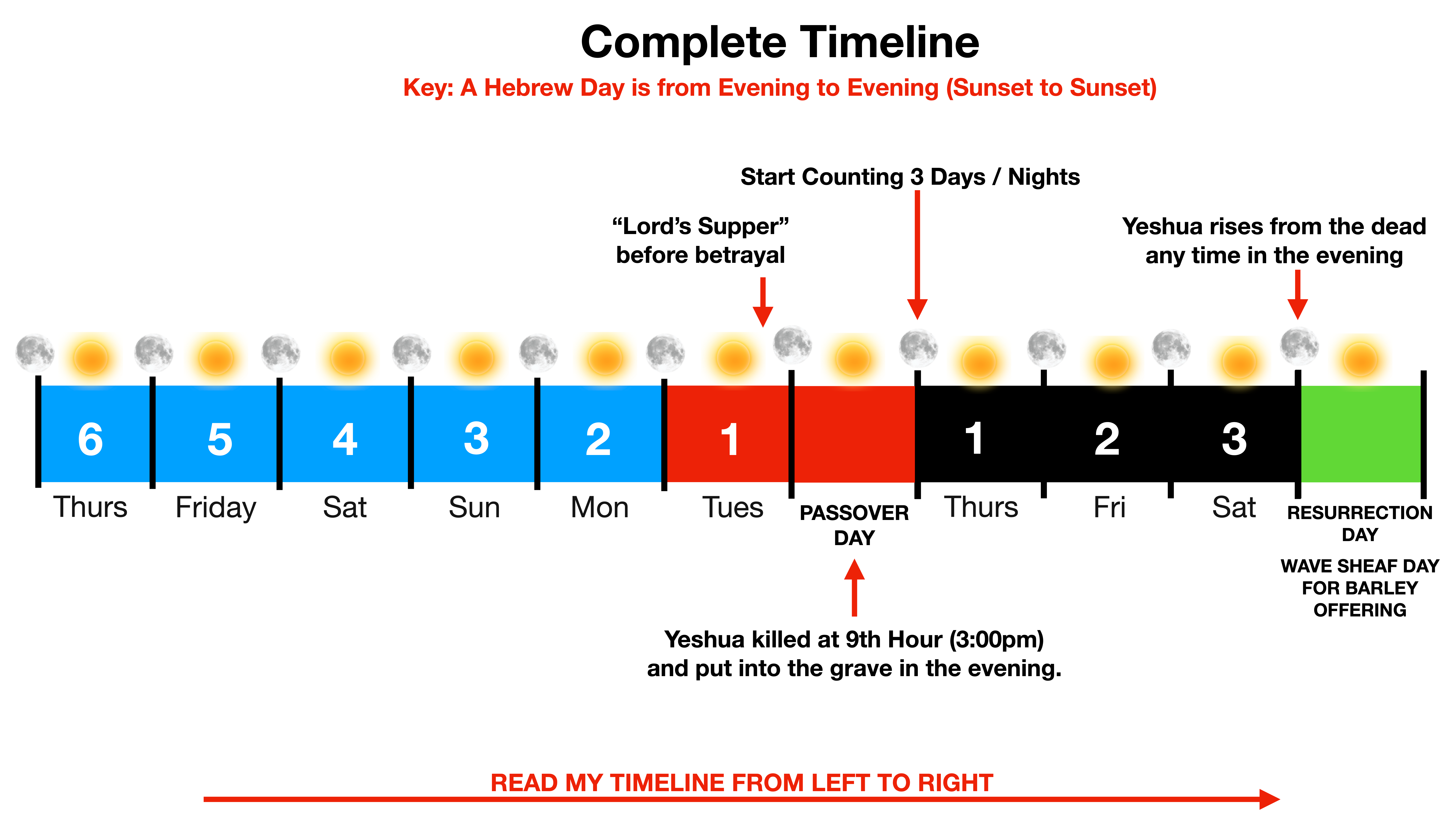
Figure 2: The Complete Passover Timeline. (Click to enlarge)
This chart reveals that Jesus was slaughtered on Wednesday at 3:00 PM. He was then put into the tomb of Joseph of Arimathea (Mat 27:60) on Wednesday evening, marking the beginning of the three-days-three-nights count. What this means is that Jesus more specifically rose from the dead on Saturday evening—before Sunday morning had dawned. So, even though Christians celebrate resurrection Sunday, it is technically more correct to say that Saturday night is the exact moment of the resurrection. This timeline also reveals, in a illustrative way, that the Lord’s Supper and Passover are clearly two distinct events. If the two are confused in any way, as is sadly the case for many folks out there, then there is not enough time to satisfy the three-days-three-nights requirement of the timeline. Jesus certainly made preparations to observe the Passover with His disciples, but because of the betrayal, He was unable to observe the feast that year.
Another major error that Christendom has made is the annual celebration of Palm Sunday. Also known as the Triumphal Entry, this day of the Passion Week is recorded in all four Gospel accounts and signifies the fulfillment of scriptures like Psalm 118:26 and Zechariah 9:9. Jesus was acknowledged by the crowds as being the rightful King of Israel, riding on a young donkey into Jerusalem and bringing salvation. The problem is that event is celebrated on the Sunday before Easter as a long-standing tradition, but as you can see from the timeline of the New Testament, the Triumphal Entry took place five days before Passover. “Palm Friday” would therefore be the correct remembrance of this event.
What’s more remarkable, and almost entirely missed by the Christian community, is the fact that Jesus appeared to the women at the tomb and later to His other disciples on the day of the Firstfruits Wave Offering. He represented the wave offering of the barley that year, having been the first of the greater harvest of God’s people that would experience redemption through the blood of the Lamb. This is why Paul writes:
But now Christ is risen from the dead, and has become the firstfruits of those who have fallen asleep. For since by man came death, by Man also came the resurrection of the dead. - 1Co 15:20,21
James echoes this same prophetic reality:
Of His own will He brought us forth by the word of truth, that we might be a kind of firstfruits of His creatures. - James 1:18
Because of Christ, the enemy of sin, death, and hell were defeated. Anyone who believes in His name will not perish. That is why Yeshua said, “I am the resurrection and the life. He who believes in Me, though he may die, he shall live” (John 11:25). We have access to eternal life if we choose to put all of our faith and trust in the finished work of Christ. But, faith without works is dead. Rather than conform to the status quo and reject the beauty and blessing of God’s Holy Days, it is time to turn around and start walking just as Christ walked.
This year’s Feast Days have already been posted on a separate page, but I will repost some of the upcoming dates for 2026 here:
🌙 First New Moon, Rosh HaShana: Friday Evening, March 20, 2026
🍷 Lord’s Supper: Thursday (Late Afternoon), April 2
🐑 Passover: Sundown April 2 to Sundown April 3
🍲 1st Day Unleavened Bread: Sundown April 3 to Sundown April 4
The reason so many people are hopelessly lost and confused about the things I have presented in this article is because they do not actually practice the things that God has prescribed for His people—the citizens—of His Holy Nation.
If you have found this article helpful, please share it with others. If you have questions or comments, please drop them below. May God richly bless you as you walk in obedience to Him this New Year. For a full list of Holy Days for the current year, click or tap on the button below:
To Assisting Your Walk With Christ,
Abraham Ojeda
PS: “Blessed is the man Who walks not in the counsel of the ungodly, Nor stands in the path of sinners, Nor sits in the seat of the scornful; But his delight is in the law of the LORD, And in His law he meditates day and night.” - Psalm 1:1,2
Sources / Notes:
“H24 - ‘āḇîḇ - Strong’s Hebrew Lexicon (NKJV).” Blue Letter Bible. https://www.blueletterbible.org/lexicon/h24/nkjv/wlc/0-1/
“H2320 - ḥōḏeš - Strong’s Hebrew Lexicon (NKJV).” Blue Letter Bible. https://www.blueletterbible.org/lexicon/h2320/nkjv/wlc/0-1/
Ibid.
“H2318 - ḥāḏaš - Strong’s Hebrew Lexicon (NKJV).” Blue Letter Bible. https://www.blueletterbible.org/lexicon/h2318/nkjv/wlc/0-1/
Yosef Eisen, “The History of the Mishna”, Chabad, https://www.chabad.org/library/article_cdo/aid/2714790/jewish/The-History-of-the-Mishnah.htm
The William Davidson Talmud (Koren - Steinsaltz), “Mishnah Rosh Hashanah 2,” Sefaria, https://www.sefaria.org/Mishnah_Rosh_Hashanah.2.2?lang=bi&with=all&lang2=en
Becca Biderman, In Search of His Ancient Path, https://www.insearchofhisancientpath.com
Ibid, “Mishnah Pesachim 5,” Sefaria, https://www.sefaria.org/Mishnah_Pesachim.5.1?lang=en
Flavius Josephus, The Jewish War, Book VI, Chapter 9, Section 3.
Philo of Alexandria, Works (Loeb Classical Library in 12 volumes) compiled and translated by F.H. Colson, G.H. Whitaker, Ralph Marcus, https://archive.org/details/PhiloSupplement01Genesis/Philo%20%2812%20volumes%20in%201%29
thank you! this child of God is doing what she can to unlearn the indoctrination. bless you!
Excellent timescale.
One thing I have never seen addressed though is the error of a Palm SUNDAY.
That isn't possible.
The Passover sacrifice is to be on the 14th. The sacrificial lamb to be brought in to the house (in this case Jerusalem) on the 10th day. Working backwards from Wednesday the 14th we get SATURDAY the 10th.
The sacrificial lamb to be one year old. Does that imply Yeshua had a one year ministry ?